
JAVA之自动装配
级联属性赋值
在
使用级联属性赋值注意事项:
- java类中必须有setter方法
- java类中必须有无参构造器(默认存在)
- 依赖其他Bean的类中,必须提供一个它依赖的Bean的getXxx()方法
Spring在Bean与Bean之间建立依赖关系的行为成为装配。Spring的IOC容器虽然强大,但本身不过是一个空壳,需要主动将Bean放进去,并告诉它Bean和Bean之间的依赖关系,才能按照我们的要求完成装配工作。
spring通过注解实现自动装配的步骤如下:
1.引入依赖
2.开启组件扫描
Spring默认不使用注解装配Bean。因此在Spring XML配置中,通过元素开启Spring Beans的自动扫描功能,即在类上使用了@Component注解,就将该类装配到容器中。
1 |
|
3.使用注解定义Bean
Spring提供了多个注解,在不同类的层次下,使用不同的注解,将他们定义为Spring Bean。
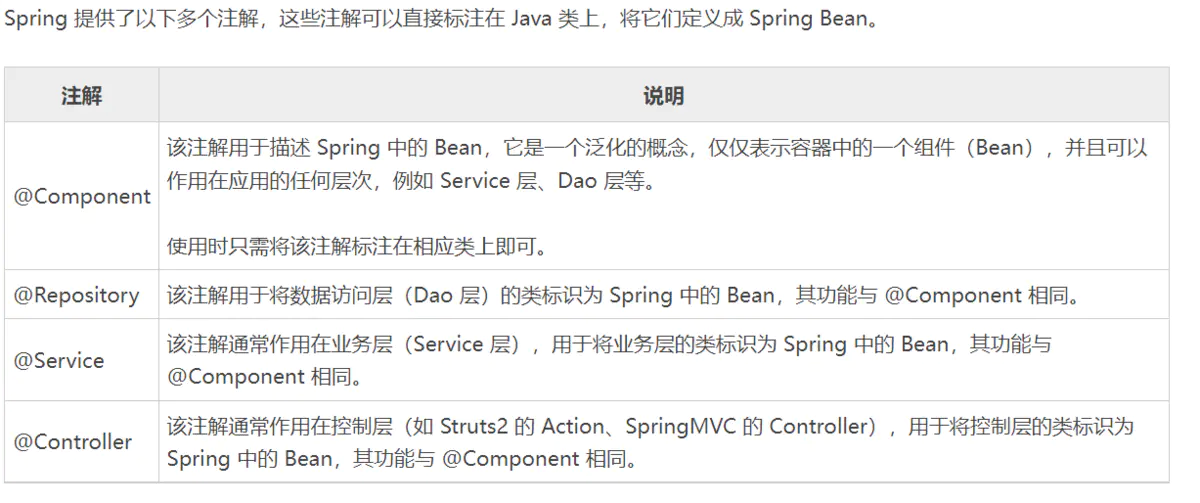
4.基于注解方式实现依赖注入
本博客所有文章除特别声明外,均采用 CC BY-NC-SA 4.0 许可协议。转载请注明来源 kil-Blog!
相关推荐
2024-03-28
Spring Boot项目全局异常处理方式
SpringBoot中,@ControllerAdvice 即可开启全局异常处理,使用该注解表示开启了全局异常的捕获,我们只需在自定义一个方法使用@ExceptionHandler注解然后定义捕获异常的类型即可对这些捕获的异常进行统一的处理。 添加@ControllerAdvice自定义全局异常处理器12345678910111213141516@RestControllerAdvicepublic class GlobalExceptionHandler { //默认全局异常处理 @ExceptionHandler(Exception.class) @ResponseStatus(HttpStatus.INTERNAL_SERVER_ERROR) public ResultData<String> exception(Exception e){ return ResultData.fail(ReturnCode.RC500.getCode(), e.getMessage()); } ...
2024-07-08
Spring Security Oauth2.1基本整合配置
依赖只需要下面的这一个依赖,springboot 版本为 3.3 1234<dependency> <groupId>org.springframework.boot</groupId> <artifactId>spring-boot-starter-oauth2-authorization-server</artifactId></dependency> 授权服务AuthorizationServerConfig配置spring 官方在快速开始里面给出了下面的默认最小配置Spring Authorization...

2022-07-15
JSON Web Token 入门教程
JSON Web Token(缩写 JWT)是目前最流行的跨域认证解决方案,本文介绍它的原理和用法。 一、跨域认证的问题互联网服务离不开用户认证。一般流程是下面这样。 1、用户向服务器发送用户名和密码。 2、服务器验证通过后,在当前对话(session)里面保存相关数据,比如用户角色、登录时间等等。 3、服务器向用户返回一个 session_id,写入用户的 Cookie。 4、用户随后的每一次请求,都会通过 Cookie,将 session_id 传回服务器。 5、服务器收到 session_id,找到前期保存的数据,由此得知用户的身份。 这种模式的问题在于,扩展性(scaling)不好。单机当然没有问题,如果是服务器集群,或者是跨域的服务导向架构,就要求 session 数据共享,每台服务器都能够读取 session。 举例来说,A 网站和 B 网站是同一家公司的关联服务。现在要求,用户只要在其中一个网站登录,再访问另一个网站就会自动登录,请问怎么实现? 一种解决方案是 session...

2022-07-16
SSM配置MyBatis步骤
1.添加所需maven依赖maven仓库:https://mvnrepository.com/ 123456789101112131415161718<!--Mybatis--><dependency> <groupId>org.mybatis</groupId> <artifactId>mybatis</artifactId> <version>3.5.9</version></dependency><dependency> <groupId>org.mybatis</groupId> <artifactId>mybatis-spring</artifactId> <version>2.0.7</version></dependency><!--数据库驱动--><dependency> ...
2024-03-28
RequestParam,PathParam,PathVariable等注解区别
@RequestParam 和 @PathVariable 注解是用于从request中接收请求的,两个都可以接收参数,关键点不同的是@RequestParam 是从request里面拿取值,而 @PathVariable 是从一个URI模板里面来填充 @RequestParam看下面一段代码: 1http://localhost:8080/springmvc/hello/101?param1=10¶m2=20 根据上面的这个URL,你可以用这样的方式来进行获取 12345public String getDetails( @RequestParam(value="param1", required=true) String param1, @RequestParam(value="param2", required=false) String param2){...} @RequestParam 支持下面四种参数 defaultValue...
2022-07-21
Spring-Boot属性绑定
@PropertySourece()my.properties 1name=kil UserService.java 添加@PropertySource(“my.properties”)指定配置文件 引用@Value(“${name}”) 1234567891011121314151617181920212223package cn.kil.springboot_parameter.service;import org.springframework.beans.factory.annotation.Value;import org.springframework.stereotype.Service;/** * @program: springboot_parameter * @ClassName: UserService * @description: * @author: toy * @create: 2022-07-20 19:51 */@Service@PropertySource("my.properties")public class...
评论
